How we help
How It Works, Step By Step
You take a 60-second check and upload your documents. We do the checks, the paperwork and find you a solicitor, free to you.
Calculate What You Could ClaimFree to check · 60 seconds · No win, no fee
In Short
Making a claim with Free Deposit Check takes about 60 seconds to start. You answer a few questions, we search all three deposit schemes, and if you may have a claim you upload three documents: photo ID, proof of paying the deposit and your tenancy agreement. We check eligibility, prepare your case and introduce you to an SRA-regulated solicitor, who works on a no win, no fee basis. You never pay us.
Who Does What
- Answer a few questions (about a minute)
- Upload your documents
- Sign the solicitor's agreement
- Check whether the deposit rules were broken
- Check your eligibility and time limit
- Review and verify your documents
- Prepare your case
- Introduce you to an SRA-regulated solicitor
The Journey In Five Steps
- Take The Free CheckAnswer a few questions about your tenancy. It takes about a minute.
- We Talk It ThroughIf a claim looks possible, our team calls you. No pressure to go ahead.
- Upload Your DocumentsID, proof you paid the deposit, and your tenancy agreement.
- We Prepare Your CaseWe check your documents against the scheme records and get it ready.
- A Solicitor Takes OverThey send a no win, no fee agreement, then write to your landlord.
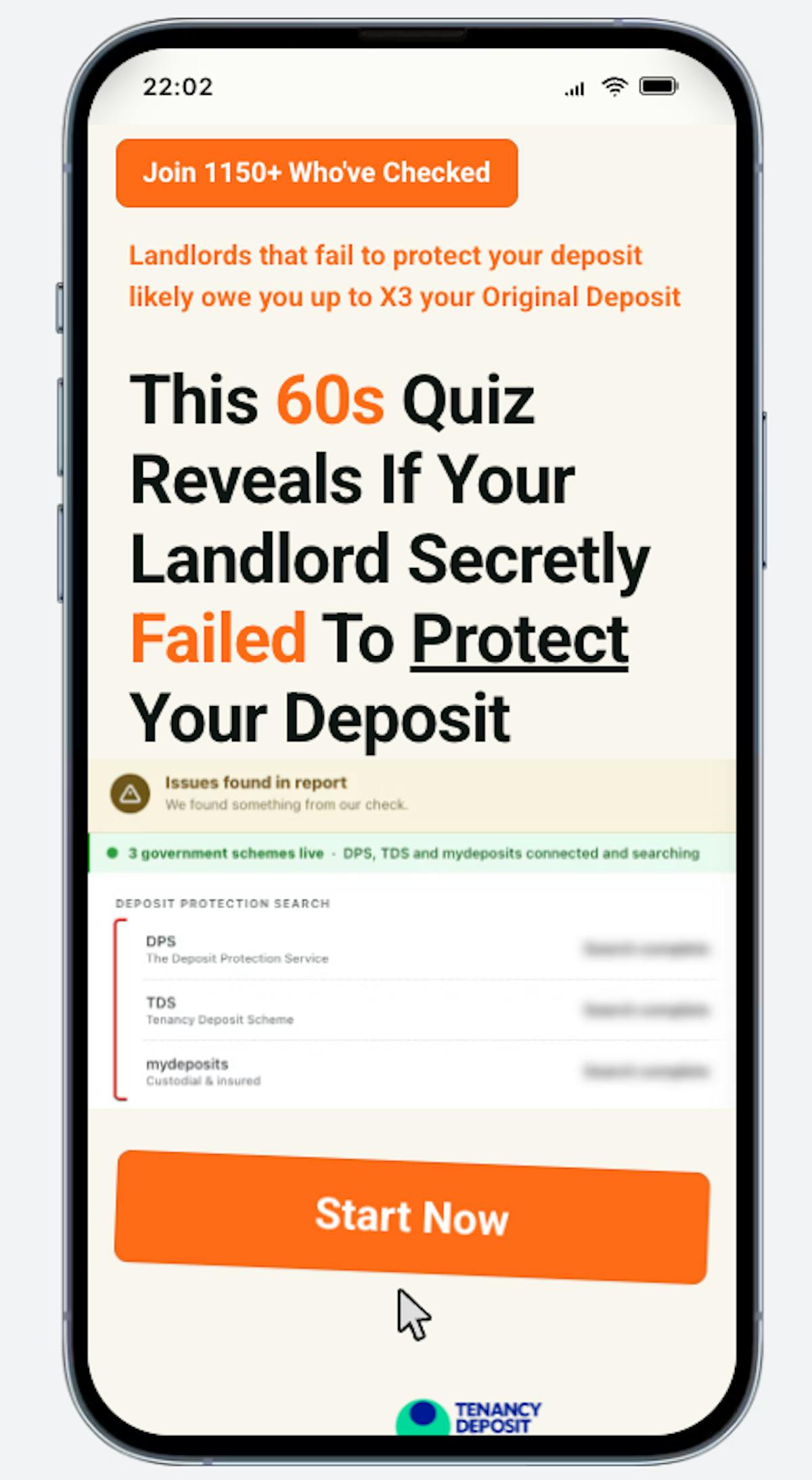
Step 1 Is This Simple
A few taps about your tenancy, your deposit and your postcode. We tell you if something looks wrong.
The Documents We Ask For
- Proof of ID, such as a passport or driving licence
- Proof you paid the deposit, such as a bank statement
- Your tenancy agreement, ideally as a PDF
- Can't find something? Tell us, there is often another way
What Happens After You Sign
- AgreementYou sign the solicitor's no win, no fee agreement
- LetterThe solicitor writes to your landlord, not you
- SettleMany landlords pay at this stage
- CourtIf not, the solicitor can take it to court
Here's What You Get When Working With Us
Recommended
 With Free Deposit Check
- Full online deposit check and analysis
- All three deposit schemes searched for you
- Eligibility and time limits checked
- Your whole case file prepared
- Matched with our specialist solicitors
- £387 court fee covered in your agreement
- With you at every step
- £0 up front and £0 if you lose (terms apply)
- Search each scheme yourself
- Work out if you qualify
- Gather and organise all the evidence
- Write the letter to your landlord
- Pay the £387 court fee up front (Help with Fees may cut it)
- Present your case to the court
- Chase your landlord for payment
- All the risk and work is on you
If you win, the solicitor's success fee (up to 25% + VAT) comes out of your compensation. The solicitor pays us for the introduction, so you never pay us anything.
Quick Answers
How Long Does The Check Take?
About a minute. You answer a few questions about your tenancy and we tell you if it looks like the deposit rules may have been broken.
What Documents Will I Need?
Photo ID, proof you paid the deposit such as a bank statement, and your tenancy agreement, ideally as a PDF.
Do I Have To Contact My Landlord?
No. The first step is a letter from the solicitor to your landlord, and their letting agent if they had one.
Do I Have To Go To Court?
Not always. Many claims settle after the solicitor's letter. If not, your solicitor handles the court claim and the paperwork.
How Long Does It Take?
We do not promise timescales. Claims that settle after the letter can be resolved within weeks; court claims usually take a few months longer.
Keep Reading
Sources
- Housing Act 2004, section 214 (legislation.gov.uk)
- Housing Act 2004, section 213 (legislation.gov.uk)
- Tenancy deposit protection (GOV.UK)
- Tenancy deposit protection: disputes and problems (GOV.UK)
- How to make a tenancy deposit compensation claim (Shelter)
- If your landlord didn't follow deposit rules (Citizens Advice)
Last updated 15 October 2026. General information for tenants in England only (the rules differ in Wales, Scotland and Northern Ireland). Not legal advice.